A practical guide to escort photography in Switzerland. What to invest in, who to work with, how to protect your privacy, and the choices that pay off
Updated May 2026
Contents
- Why photos do most of the work
- The three types of photos you actually need
- What “professional” really means
- Choosing a photographer
- Privacy and identity protection
- Location, wardrobe, and styling
- Editing. Where the line sits
- When and how often to update
- Budget. What to spend
- Common mistakes
- Frequently asked questions
- Support and resources
01Why Photos Do Most of the Work
On any directory or profile platform, the photo is what stops the scroll. The bio gets read after the photo earns the click. Rates, services, and availability are all secondary to that first visual decision.
This is not a trivial pattern to manage. The photos must be appealing enough to attract serious clients, distinctive enough to stand out from hundreds of similar profiles, recent enough to be honest, and processed enough to protect your identity from unwanted exposure. All four at once.
This guide goes through the practical choices that make professional photos work as a business asset rather than as a generic visual.
For the broader profile context, see our article on creating an escort profile.
02The Three Types of Photos You Actually Need
A working profile uses three distinct photo categories. Each does different work.
The three photo types every profile needs
| Type | Purpose | Quantity |
|---|---|---|
| Hero photos | Stop the scroll. The first 1 to 3 photos visitors see. High impact. | 3 to 5 final selects |
| Body and detail photos | Confirm what the hero suggests. Different angles, postures, full body. Build credibility. | 5 to 10 final selects |
| Lifestyle and personality photos | Convey personality, atmosphere, who you are beyond the body. Differentiate. | 3 to 5 final selects |
A complete profile typically uses 10 to 15 photos in rotation, with the strongest 3 to 5 as hero positions. More than 20 photos rarely improves conversion; it dilutes attention.
03What “Professional” Really Means
“Professional photos” is a phrase that gets used loosely. Specifically, what matters:
Technical quality
- Sharp focus, clean lighting, no blur from camera shake
- Color balance that reads natural across screens
- Resolution sufficient for both small profile thumbnails and larger gallery views (typically 2400px on the long edge minimum)
- Consistent style across the set, not a patchwork of different sessions and looks
Compositional quality
- Framing that flatters the body without contortion
- Posing that reads as natural rather than forced
- Backgrounds that don’t distract or carry unintended details
- Variation in poses and angles across the set
Aesthetic quality
- A look and feel that aligns with your positioning
- Wardrobe that fits your audience expectation
- Atmosphere that matches the experience you offer
- Photos that, taken together, tell a coherent visual story
The biggest difference between professional and amateur photos is rarely the camera. It’s the lighting, the posing direction, and the editing. A great photographer with a mid-range camera produces stronger results than a basic photographer with the latest equipment.
04Choosing a Photographer
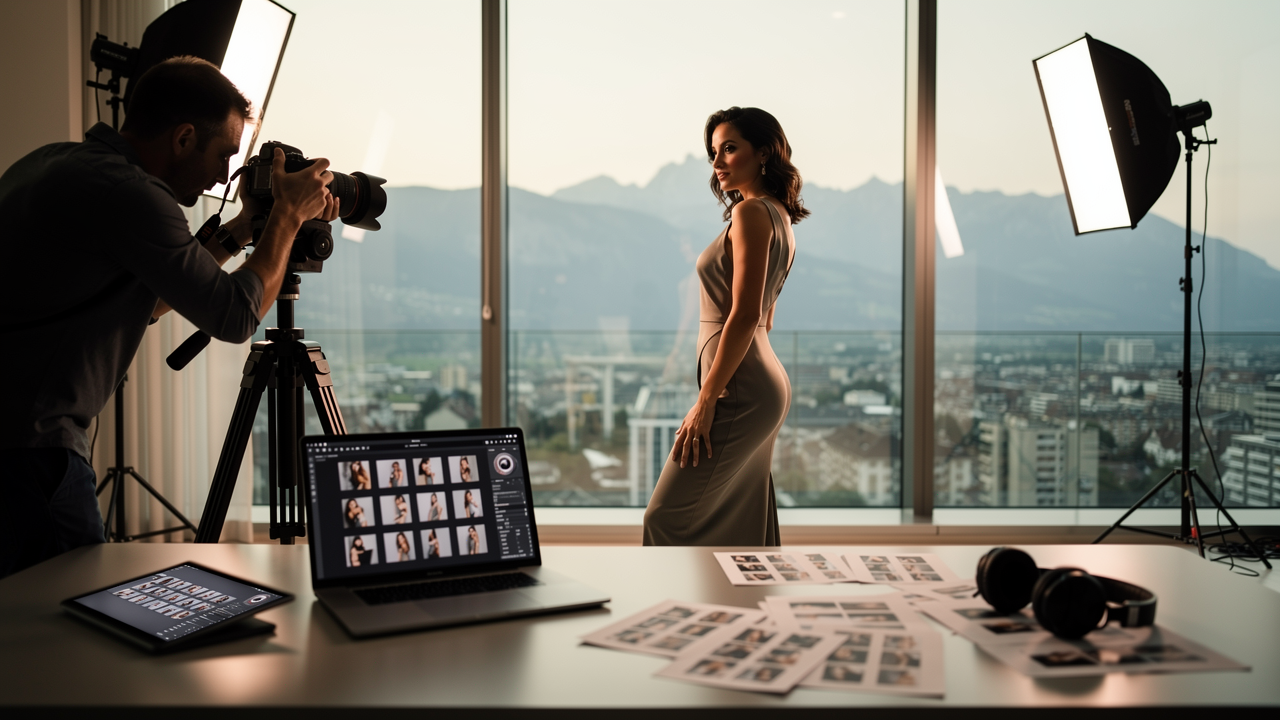
The photographer choice is the most consequential single decision in this process. A few options exist with different trade offs.
Specialized adult/boudoir photographer
- Pros: Direct experience with the kind of photos you need. No friction around content. Often discreet about client identity.
- Cons: Range of skill is wide; some specialists produce formulaic work. Verify portfolio quality, not just specialty.
- Cost in Switzerland: CHF 800 to 2,500 per session
General professional photographer (fashion, portrait)
- Pros: Often higher technical and compositional quality. Can produce distinctive aesthetic results.
- Cons: Some refuse adult content. Even those who accept may not have experience with discretion needs. Verify upfront.
- Cost in Switzerland: CHF 1,500 to 5,000 per session
Photographer in another country
- Pros: Can be cheaper, can offer a “shoot tour” combined with travel
- Cons: Coordination, travel costs, less ability to verify the photographer in person before booking
- Cost: Highly variable
What to verify before booking
- Portfolio aligned with your aesthetic direction
- Clear written agreement on usage rights, exclusivity, and content boundaries
- Confidentiality clause in writing
- Reference checks if possible (other escorts, other clients)
- Clear deliverables: number of final retouched photos, raw files availability, format and resolution
05Privacy and Identity Protection
Photos are the highest exposure asset of an escort’s online presence. Several practices reduce identity risk.
Face visibility decisions
The face question has three common answers, each with trade offs:
- Full face visible. Highest conversion. Most clients want to see who they are meeting. Highest privacy exposure.
- Partial face (eyes covered, profile shots). Moderate conversion drop. Privacy partially protected.
- Face hidden (back of head, blurred, cropped out). Substantial conversion drop. Maximum privacy. Common for workers in sensitive personal situations (other professional career, family considerations).
This is a personal decision. Some workers shift over time as their situation evolves.
Background and details
- Avoid backgrounds that identify a specific apartment or building (distinctive views, unique architecture, neighborhood markers)
- Remove or cover identifiable items in the workspace (artwork, mail, books with names, unique furniture)
- Generic neutral backgrounds (studio shots, hotel rooms not your workspace, plain walls) protect privacy
Tattoos and identifying marks
Distinctive tattoos can be identifying. Options:
- Cover with body makeup during the shoot
- Frame around them
- Edit out in post-production
- Or accept them as part of your visible identity, knowing they make you searchable
Metadata
Modern photos contain metadata: camera, date, location (if GPS was on), photographer details. Most platforms strip this automatically, but verify. Free online tools can check whether metadata is present in a published image.
Reverse image search
Periodically run a reverse image search (Google Images, TinEye) on your published photos. Detects unauthorized reposting and lets you act quickly through DMCA notices or platform reporting.
06Location, Wardrobe, and Styling
The visual elements outside the photographer’s technical work make a substantial difference.
Location
- Photographer’s studio. Controlled lighting, neutral backgrounds, predictable results.
- Hotel room. Adds atmosphere. Higher cost. Choose hotels with good light and clean modern interiors.
- Outdoor. Effective for lifestyle shots. Privacy considerations apply (recognizable locations).
- Your workspace. Most authentic but reveals it. Only if anonymity of the location is acceptable.
Wardrobe
A typical session uses 4 to 6 outfit changes. The mix matters more than the count:
- One or two refined elegant outfits (cocktail dress, lingerie of high quality)
- One casual personality outfit (jeans, smart casual)
- One or two intimate looks aligned with your audience (lingerie, bodysuit, robe)
- Optionally a specialty outfit if it fits your positioning (latex, professional uniform, theme)
Quality of fabric, fit, and condition shows on camera. A well-fitted simple item beats a poorly fitting expensive one.
Hair and makeup
- Professional hair and makeup for the shoot is worth the investment
- Cost in Switzerland: typically CHF 200 to 500 for hair and makeup combined
- The results photograph substantially better than even excellent personal styling
07Editing. Where the Line Sits
Photo editing is normal and expected. Excessive editing creates a credibility gap that disappoints in person.
Editing that is normal
- Color and contrast adjustment
- Light corrections (skin appearance, blemish removal, even tone)
- Background cleanup
- Minor figure refinements
- Removal of identifying details for privacy
Editing that backfires
- Substantial body shape modification (waist, breasts, legs reshaped)
- Face features modified (eyes, nose, jawline reshaped)
- Skin smoothed to plastic appearance
- Visible age reduction beyond what current appearance shows
The reason this backfires: the client meets the actual person, not the edited image. The gap creates disappointment, complaints, and bad reviews. The edit-conservative approach is better long term.
08When and How Often to Update
The standard cadence
- Major shoot: every 12 to 18 months
- Touch-up shoot or selected new photos: every 6 to 9 months
- Casual lifestyle photos for variety: when relevant
When to update outside the cadence
- Substantial change in appearance (hair, weight, style)
- New positioning or audience target
- Change of season (some directories favor seasonal updates)
- When current photos start feeling dated
Photos and trust
A profile that uses photos clearly several years old loses trust. Clients increasingly notice and prefer profiles that signal recency. A new shoot every 12 to 18 months is part of basic maintenance, not optional.
09Budget. What to Spend
Realistic photo budget for a Switzerland-based escort
| Item | Range (CHF) |
|---|---|
| Specialized photographer, full session | 800 to 2,500 |
| Hair and makeup professional | 200 to 500 |
| Wardrobe additions specifically for the shoot | 200 to 800 |
| Hotel room or location rental if needed | 200 to 600 |
| Touch up shoot 6 months later | 400 to 1,000 |
| Realistic annual photo budget | 2,000 to 5,000 |
For an escort earning CHF 8,000 to 15,000 per month, this represents 1 to 4% of annual revenue. The return on a strong photo set is among the highest of any business expense in this work.
10Common Mistakes
- Selfies and amateur phone photos as primary profile content. Acceptable as supplementary lifestyle content; insufficient as the foundation of a profile.
- Photos that look identical to dozens of others. The same generic poses, the same lighting, the same wardrobe choices. Distinctiveness compounds over time.
- Heavy filters that erase personality. Smoothness and uniformity make every face read the same way. Specific personality is the asset.
- Photos with timestamp visible in the background (calendars, news on TV, branded items) that date the photo even if the photo itself is good.
- Letting the photographer keep all rights. Always get a clear written agreement: you have unrestricted use rights for your professional needs, and the photographer agrees not to publish without your consent.
11Frequently Asked Questions
Can I use photos taken by a partner or friend who happens to have a good camera?
For supplementary lifestyle content, yes. For the hero photos that anchor your profile, almost never. The gap between someone with a good camera and a working professional photographer is substantial in lighting, posing direction, and editing. Hero photos justify the professional investment.
What if I am very camera shy?
A good photographer manages this. Specialists in this work routinely shoot with people who are nervous, tense, or new to photography. Tell the photographer in advance; they will adjust the session pace, start with easier setups, and build confidence over the shoot.
Should photos show explicit content?
Most platforms allow tasteful nude or semi-nude content but require non-explicit primary photos. The line varies by platform; verify their content policy. Strategically, suggestion often performs better than explicit content for most audiences.
Can I use AI generated photos?
Several platforms now explicitly forbid AI generated profile photos. Beyond the policy issue, AI photos create a fundamental honesty problem: the client meets a person who isn’t the one in the photo. The fallout (complaints, refunds, bad reviews) outweighs any short term benefit.
What about old professional photos from years ago?
Acceptable as supplementary content with clear context. Inappropriate as primary profile photos that suggest current appearance. Honesty about the photo’s age is mandatory if used.
Should I do my own light editing on top of the photographer’s work?
Generally no. The photographer’s editing is part of the deliverable. Adding amateur filters or edits on top usually reduces the technical quality the photographer worked to achieve. If specific changes are needed, request them from the photographer.
Can a photographer in Switzerland legally photograph adult content?
Yes. Adult photography is legal in Switzerland between consenting adults, with no specific licensing requirement for the photographer. The constraint is on distribution and public display, where standard content laws apply.
12Support and Resources
The strongest photo set is the one that genuinely represents you, taken by someone whose work you trust, with full agreement on rights and use. Cutting corners on photos rarely saves money in the long run; the conversion difference compounds over months.
6inthecity
Premium directory. Profile photo guidelines and platform standards.
Aspasie
Geneva. Counseling on professional positioning.
FIZ
Zurich. Counseling and professional support.
DMCA / Image rights
Online resources for handling unauthorized image use
Disclaimer: This guide is for informational purposes only. Photographer choices, image rights, and content rules vary by platform and contract. Verify all agreements in writing before any session. Last updated: May 2026